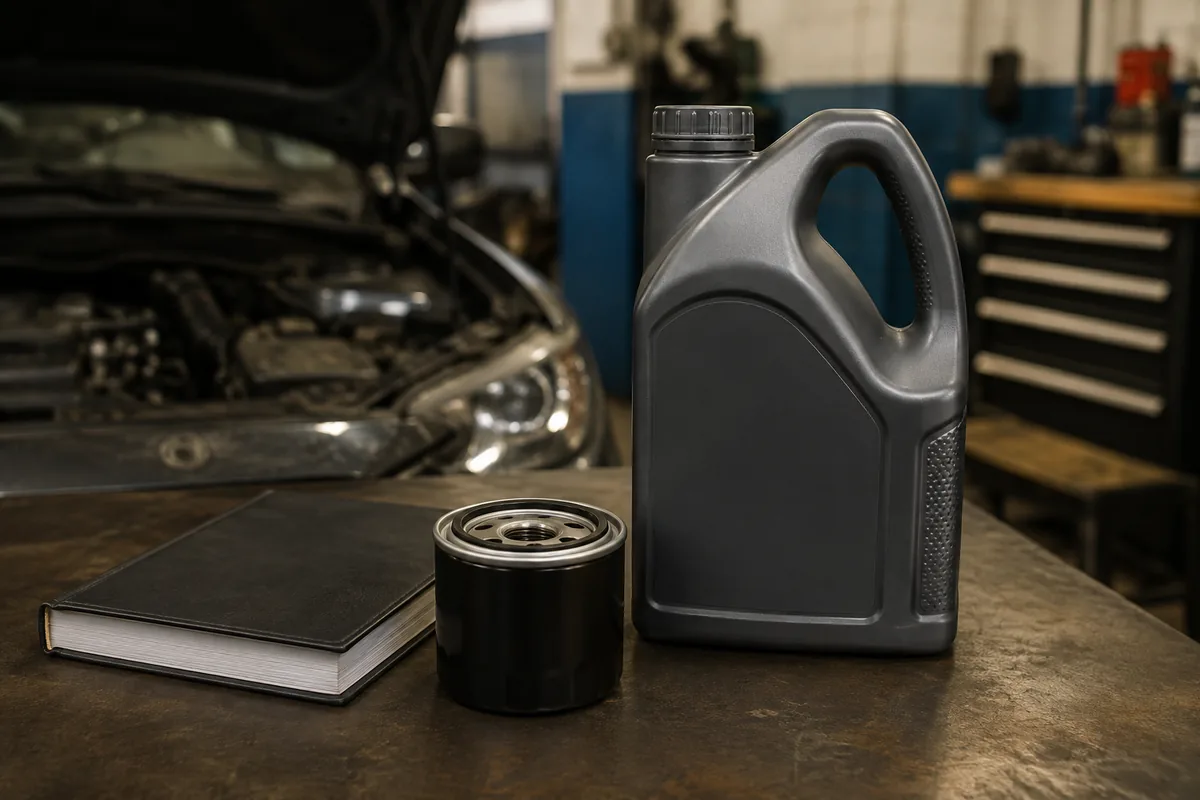
AI-generated editorial illustrations; the scenes do not depict Titan personnel, premises or specific products for sale.
Two oil containers can show the same viscosity grade while listing different performance specifications or manufacturer approvals. Use the vehicle's complete requirement when choosing an oil service.
Find the full requirement
Check the owner's manual or current manufacturer service information for the exact engine. Record the viscosity and any required industry classification or vehicle-maker specification. Engine options within the same model year can matter, so do not borrow the answer from a similar-looking vehicle.

Read the exact product information
Compare the proposed oil's current label and product data with those requirements. A brand name alone is not enough because one brand sells several formulations. Pay attention to the distinction between a formal approval and other manufacturer wording when the vehicle requires an approval.

Keep the service traceable
Ask the invoice to identify the oil used and the applicable filter. Follow the vehicle's service schedule and monitoring instructions rather than extending an interval solely because the container advertises long life. If the engine has an unusual service history or consumption concern, discuss that separately; changing viscosity by guesswork is not a diagnosis.
Sources and further reading
These resources provide technical background and consumer guidance for the decisions discussed above. Use the instructions for your exact vehicle and installed components when applying that information. Manufacturer examples describe their own products; Wikipedia is included for general terminology. Sources reviewed September 6, 2026.
A vehicle-specific next step
For help planning service in Madison or the Nashville area, bring the vehicle details and relevant records discussed in this guide. Confirm the inspection scope, current product availability and estimate with the shop.
Frequently asked questions
Are all oils labeled 5W-30 interchangeable?
No. The viscosity label is only part of the specification. The engine's performance and approval requirements must also be met.
Related guides
Continue reading
Maintenance · 3 min read
A Simple Maintenance Log for a Household With Several Cars
When several vehicles share one household, maintenance dates and specifications are easy to confuse.
Read the guide →Maintenance · 3 min read
Review the Repair Invoice Before Leaving the Shop
The final invoice is the record you will use for maintenance, follow-up and possible coverage questions.
Read the guide →
Maintenance · 3 min read
What to Send Before a Tire or Repair Appointment
A clear appointment request helps the shop identify the vehicle and plan the right kind of visit.
Read the guide →