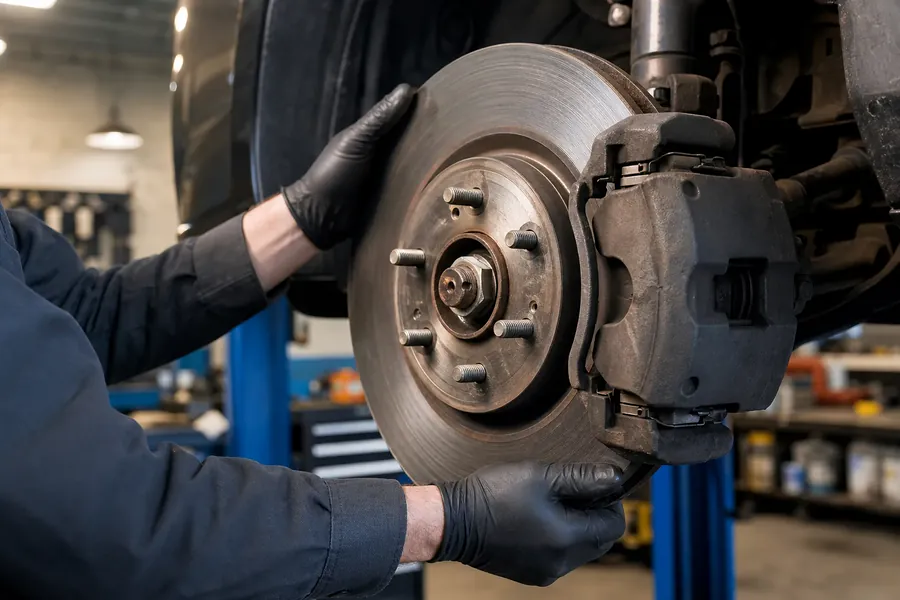
Brake noise is a symptom, not a complete diagnosis. A brief sound after rain, a wear-indicator squeal, a grinding contact, and a vibration under braking point to different possibilities and different levels of urgency. The safest approach is to notice when the symptom occurs, avoid promising yourself a specific part will fix it, and arrange an inspection when braking performance, pedal feel, warning lights, or harsh mechanical noise changes.
A high-pitched squeal may be a wear warning
Many disc-brake pads include a small metal indicator designed to contact the rotor and make a high-pitched sound as the friction material approaches its service limit. The noise may appear first during light braking and become more consistent over time. That warning is useful because it can prompt an inspection before the pad material is fully consumed.
Squealing does not always prove that the pads are worn out. Pad compound, glazed surfaces, dust, hardware movement, weather, and rotor condition can also contribute. Note whether the noise comes from the front or rear, whether it happens only when the brakes are cold, and whether firm braking changes it. An inspection can then measure remaining material and check the complete assembly.
Grinding deserves prompt attention
A harsh grinding or scraping sound while braking can indicate that friction material is severely worn and metal parts are contacting the rotor. Continued use may increase repair cost and reduce braking consistency. Grinding can also come from debris, a damaged shield, parking-brake hardware, a wheel bearing, or another rotating component, but it should not be dismissed without inspection.
If grinding is accompanied by reduced braking, a very low pedal, pulling, smoke, a burning smell, or a wheel that becomes unusually hot, stop driving when it is safe and seek qualified assistance. Do not touch the wheel or brake components after driving because they may be hot enough to cause injury.
A brief sound after rain can be normal surface rust
Brake rotors are exposed iron surfaces and can develop a thin layer of rust after rain, washing, or humid overnight parking. The first few brake applications may create a light scraping sound as the pads clean the rotor surfaces. The noise should usually fade quickly as the vehicle is driven and braking remains normal.
A sound that continues, becomes louder, or returns on every stop is different from brief surface cleanup. Visible deep scoring, heavy rust scaling, vibration, pulling, or reduced braking also warrants inspection. Describe how long the vehicle was parked and how many stops it takes for the sound to change.
Clicking or clunking can involve hardware or suspension
A single click when changing direction, a clunk during the first brake application, or repeated movement noise may involve brake pads, caliper hardware, mounting points, suspension parts, axle components, or something else shifting under load. The timing of the sound is important. Explain whether it happens while braking, releasing the pedal, turning, reversing, or traveling over bumps.
Loose or damaged components can affect safety, so avoid guessing based on the sound alone. A technician may need to inspect brake hardware, caliper movement, wheel fasteners, steering and suspension joints, and nearby shields. Recent tire, brake, or suspension work is useful context and should be mentioned.
Steering-wheel shake during braking needs separation
A steering wheel that shakes mainly while braking from road speed often leads people to ask for rotors immediately. Rotor thickness variation or lateral runout can contribute, but wheel mounting, tire condition, suspension looseness, hub surfaces, and other factors can produce or amplify the sensation.
Notice whether the vibration is felt in the steering wheel, brake pedal, seat, or entire vehicle. Also note the speed range and whether it occurs without braking. A vibration present during normal cruising may point more strongly toward tire, wheel, or rotating-component concerns than an alignment or brake problem by itself.
A soft, low, or changing pedal is more important than noise
Pedal feel provides critical information. A pedal that suddenly travels farther than usual, feels soft, slowly sinks while pressure is held, or requires pumping can indicate a hydraulic or mechanical problem. A very hard pedal with reduced assist can involve a different set of concerns. Any sudden change deserves prompt evaluation.
If the vehicle does not stop normally, do not continue driving to test whether the symptom improves. Warning lights, visible fluid, a low brake-fluid level, or a change after recent brake work should be reported. Avoid adding fluid simply to turn off a warning without understanding why the level changed.
Brake and ABS warning lights require context
The red brake warning and amber ABS warning communicate different system concerns, and exact meanings vary by vehicle. A red warning may relate to the parking brake, fluid level, hydraulic system, or another serious condition. An ABS warning can mean anti-lock function is limited even when basic braking remains available.
Check the owner's manual for the specific symbol, note whether multiple lights appeared together, and report any change in braking behavior. A trouble code can identify the system that detected a fault, but it does not always identify the failed part. Diagnosis should combine the code with inspection and testing.
How to describe brake symptoms when you call
Have the vehicle year, make, model, mileage, and recent repair history ready. Explain the sound in your own words, when it occurs, which speed range is involved, whether the pedal or steering wheel changes, and whether any warning light is on. Mention pulling, odor, heat, fluid, smoke, or a recent impact.
Titan Tire & Wheels is located at 1432 Gallatin Pike N in Madison, Tennessee. Call (615) 953-7490 before visiting to confirm current brake-service availability and timing. The correct recommendation should follow an inspection rather than an online promise that every noise needs the same pads, rotors, or repair.
Frequently asked questions
Can I drive with squealing brakes?
A brief or light squeal does not reveal the cause. Arrange an inspection, and stop driving if braking performance, pedal feel, warning lights, grinding, smoke, or severe pulling changes.
Do noisy brakes always need new rotors?
No. The cause may involve pad wear, hardware, surface condition, contamination, shields, or another component. Rotor replacement should follow measurements and inspection.
Why do brakes scrape after rain?
A thin surface-rust layer can form on exposed iron rotors and may clean off during the first few normal stops. Persistent or harsh scraping is different and should be inspected.
Can wheel alignment cause brake vibration?
Alignment is not the usual cause of vibration that appears only during braking. Brake, tire, wheel, hub, and suspension conditions should be separated by inspection.
Related guides
Continue reading
Brake Repair · 6 min read
When Brake Fluid Needs Attention
Practical brake repair guidance about brake fluid: symptoms, safe checks, look-alike problems, and details Madison drivers should share before service.
Read the guide →Brake Repair · 5 min read
Parking Brake Care and Warning Signs
Practical brake repair guidance about parking brake: symptoms, safe checks, look-alike problems, and details Madison drivers should share before service.
Read the guide →Brake Repair · 5 min read
What a Brake Warning Light Can Mean
Practical brake repair guidance about brake warning light: symptoms, safe checks, look-alike problems, and details Madison drivers should share before service.
Read the guide →