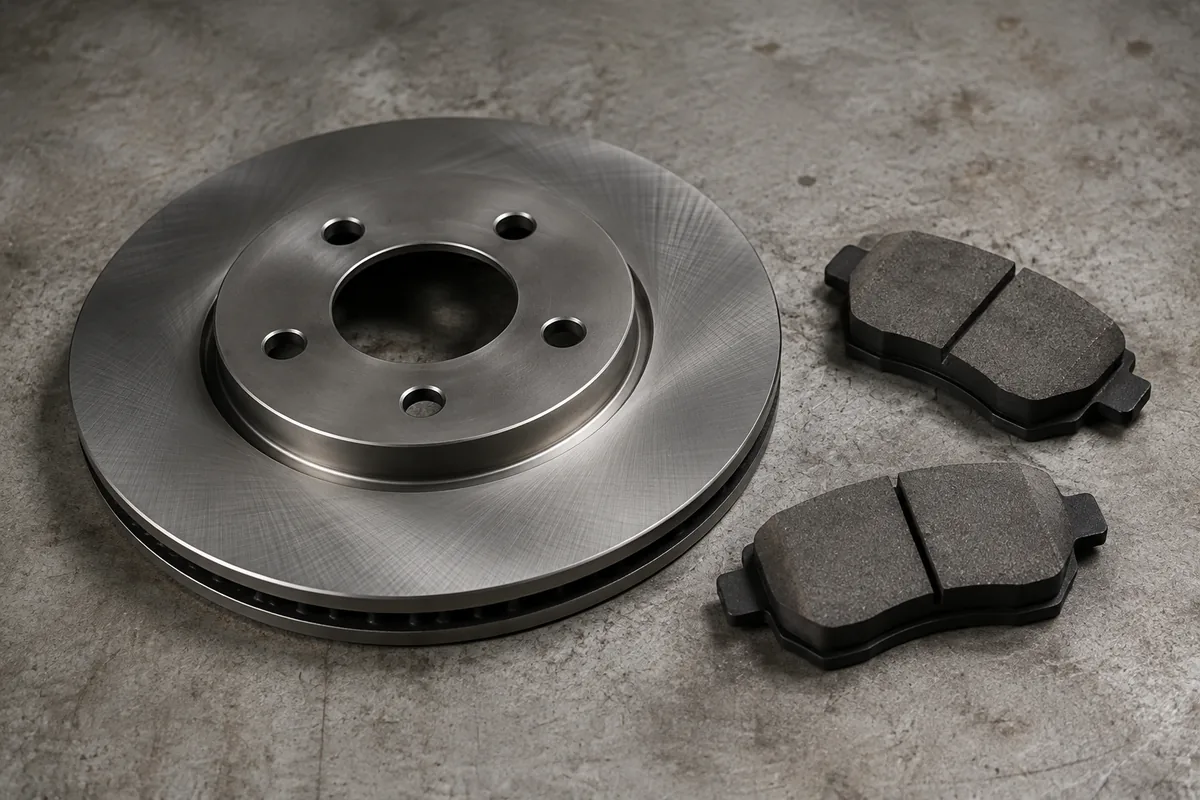
AI-generated editorial illustrations; the scenes do not depict Titan personnel, premises or specific products for sale.
Ceramic and other material labels are common in brake advertising. They describe broad categories, but the correct choice still depends on the exact vehicle application and intended use.
Begin with a supported application
Ask which specific part numbers are suitable for the vehicle's brake system. A pad's shape fitting into a caliper is not the entire approval process. The product should be intended for that application and installed with the required associated components and procedures.
Explain your priorities
Discuss ordinary commuting, frequent heavy loads or other relevant use. Mention noise or dust concerns without assuming the material name guarantees a particular result. Compare the manufacturer's claims for the exact products rather than applying a reputation for one formulation to every pad sold under that category.
Evaluate the whole brake condition
A different pad compound is not a substitute for diagnosing a sticking component, damaged rotor or other problem. Ask how the proposed repair addresses the inspection findings. Keep the product information and any bedding instructions with the invoice. A suitable choice should balance application requirements and real use, with realistic expectations about comfort and maintenance.
Sources and further reading
These resources provide technical background and consumer guidance for the decisions discussed above. Use the instructions for your exact vehicle and installed components when applying that information. Manufacturer examples describe their own products; Wikipedia is included for general terminology. Sources reviewed September 6, 2026.
A vehicle-specific next step
For help planning service in Madison or the Nashville area, bring the vehicle details and relevant records discussed in this guide. Confirm the inspection scope, current product availability and estimate with the shop.
Frequently asked questions
Are ceramic pads automatically the best option for every vehicle?
No. Confirm the exact product's suitability and intended use. A broad material label does not replace application-specific guidance.
Related guides
Continue reading
Brakes · 3 min read
Before Towing, Discuss Brake Condition and the Full Vehicle Setup
A planned towing trip is a useful time to review vehicle condition, especially if a brake concern has been postponed.
Read the guide →
Brakes · 3 min read
Electronic Parking Brakes Change the Pad-Service Conversation
An electronic parking brake can require specific procedures during rear brake work.
Read the guide →Brakes · 3 min read
More Brake Dust on One Wheel: An Observation Worth Reporting
Brake dust can vary with pad material and use, but a new difference between wheels is useful information for an inspection.
Read the guide →