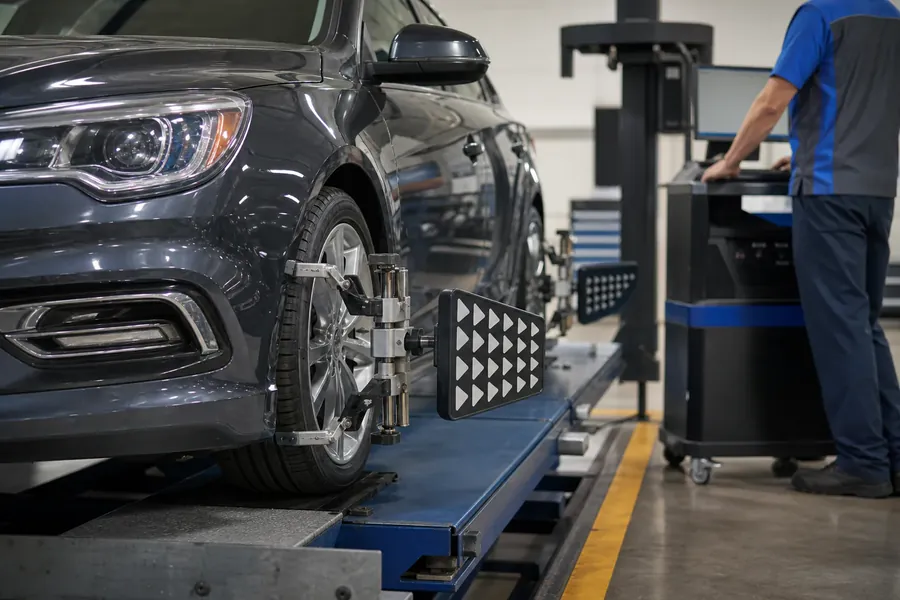
A vehicle can drift or wear tires unevenly for more than one reason, so an alignment should never be diagnosed from a single symptom alone. Still, certain changes in steering, tracking, and tire wear are useful reasons to request an inspection. Catching the underlying problem early can protect a new set of tires, make the vehicle easier to control, and reveal steering or suspension concerns that an alignment adjustment by itself cannot solve.
1. The vehicle consistently pulls to one side
A steady pull on a reasonably flat road is one of the most familiar alignment complaints. The vehicle may require constant steering pressure to stay centered, or it may begin moving left or right when you briefly relax your grip. Note which direction it pulls, whether the behavior changes while braking, and whether it is present on several different roads.
Road crown naturally encourages a slight drift on some streets, and tire pressure or tire construction can also create a pull. A dragging brake, worn suspension part, or mismatched tire can produce similar behavior. That is why a useful inspection includes the tires and related components rather than treating every pull as an automatic toe adjustment.
2. The steering wheel sits off-center
When the vehicle is traveling straight, the steering wheel should normally appear centered. If the wheel must be held noticeably left or right while the vehicle tracks straight, the alignment may be out of specification or the steering wheel may not have been centered correctly during earlier work.
An off-center wheel matters because it can make small steering corrections less intuitive and may accompany incorrect toe settings. Tell the technician whether the condition began after a pothole, curb contact, suspension repair, tire replacement, or previous alignment. That timeline can narrow the inspection and prevent the symptom from being adjusted without understanding why it appeared.
3. Tire tread is wearing unevenly
Alignment angles influence how the tread contacts the road. Excess wear on an inside or outside shoulder, a feathered texture across tread blocks, or different wear patterns between tires may indicate a toe, camber, or related mechanical issue. Run your hand carefully across the tread only when the vehicle is parked safely and the tires are cool, and never reach under a raised vehicle.
Uneven wear can also come from incorrect pressure, missed rotations, worn shocks or struts, loose steering parts, aggressive driving, or tire damage. By the time the pattern is obvious, an adjustment cannot restore the rubber already lost. The goal is to correct the cause and protect the remaining or replacement tires from repeating the same pattern.
4. Steering feels nervous, loose, or slow to return
A vehicle that wanders, requires frequent corrections, or feels unusually sensitive at highway speed deserves attention. Alignment can influence stability and steering return, but so can tire condition, tire pressure, steering linkage, ball joints, control-arm bushings, wheel bearings, and other suspension parts.
Describe the sensation in practical terms when you call. Explain the speed at which it appears, whether wind or road grooves make it worse, whether the steering has free play, and whether you hear a clunk. Those details are more useful than simply saying that the car feels bad, and they help determine whether an alignment check or a broader diagnostic inspection should come first.
5. The symptoms began after an impact
A hard pothole, curb strike, road debris impact, or minor collision can change alignment or damage a tire, wheel, or suspension component. Even when there is no obvious exterior damage, the steering wheel may shift off-center or the vehicle may begin pulling afterward. A prompt visual and alignment check can identify whether measurements changed.
Do not assume an adjustment is enough after a severe impact. A bent wheel, tire sidewall injury, damaged control arm, shifted subframe, or loose component needs the appropriate repair before final alignment. If the vehicle shakes, makes new noises, loses air, or feels unsafe, reduce driving and arrange qualified help instead of waiting for routine service.
6. New tires are replacing an unevenly worn set
Installing new tires without addressing the reason the old tires wore unevenly can shorten the life of the replacement set. If the previous tires show shoulder wear, feathering, or a major difference from one position to another, ask for the steering, suspension, pressure history, and alignment to be considered before assuming the new tires will solve the problem.
A preventive alignment check is especially sensible when the vehicle already pulls, the steering wheel is off-center, or a suspension part was recently replaced. The check creates a measurement baseline. If the angles are already within specification, the technician can focus on other causes instead of making unnecessary adjustments.
7. Alignment has not been checked after steering or suspension work
Replacement of tie rods, control arms, struts, ball joints, steering racks, and certain other components can affect wheel angles or require an alignment as part of the completed repair. The exact need depends on the vehicle and the work performed. Review the repair invoice or ask the shop whether a final alignment was included.
If the vehicle handles differently after repair, return promptly and describe the change. Good alignment work starts with sound parts, correct ride height, appropriate tire pressure, and an accurate measurement. Adjusting around worn or loose components can produce numbers on a screen without delivering a stable, lasting result on the road.
What to expect from an alignment conversation
Have the vehicle year, make, model, tire size, and symptoms ready. Mention recent impacts, tire replacement, steering or suspension repairs, warning lights, and uneven tread. The shop can confirm current service availability and explain whether the first step is a visual inspection, alignment measurement, tire service, or broader diagnosis.
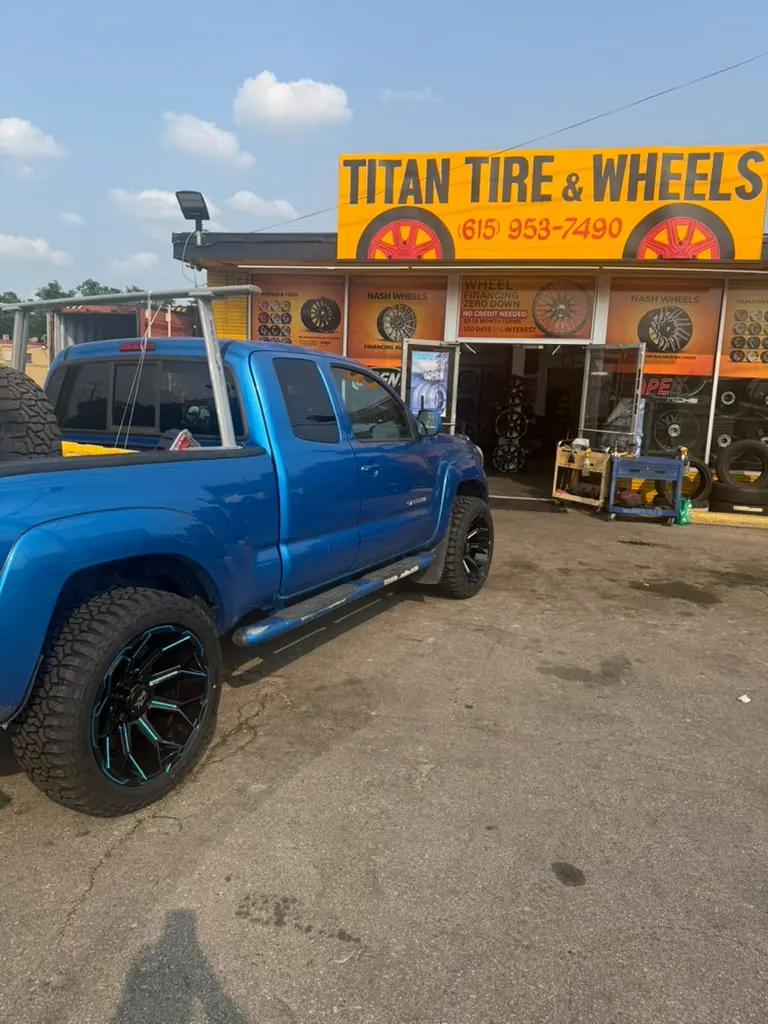
Titan Tire & Wheels is located at 1432 Gallatin Pike N in Madison, Tennessee. Call (615) 953-7490 before visiting to confirm timing and describe the concern. An honest next step may be an alignment, a mechanical repair first, or verification that the measurements are already within specification.
Example: an off-center wheel after a pothole
A driver notices that the steering wheel sits differently after a pothole impact. Useful information for the shop includes the timing of the change, which wheel hit the pothole, any new vibration, visible tire damage and whether braking changes the symptom. This is a hypothetical example, not a completed Titan repair case.
Avoid testing the vehicle by letting go of the steering wheel. If a tire has a bulge, rapid pressure loss or other obvious damage, arrange help instead of continuing to drive on it. A vehicle-specific inspection can establish what needs attention before an alignment is selected.
- Wheel alignment in Madison: what to discuss before service
- Questions to ask about an alignment printout
Frequently asked questions
How often should a wheel alignment be checked?
There is no single interval for every vehicle. Consider a check when symptoms appear, after a significant impact, after relevant steering or suspension work, or when uneven tire wear is discovered.
Can an alignment stop steering-wheel vibration?
Alignment is not the usual cause of vibration. Tire balance, tire or wheel damage, mounting issues, brakes, and worn components are common possibilities that should be separated by inspection.
Will an alignment fix tires that already wore unevenly?
It may correct the condition that contributed to future wear, but it cannot replace tread that has already been lost or repair a damaged tire.
Does every pull mean the car needs an alignment?
No. Road crown, tire pressure, tire construction, brakes, and steering or suspension problems can cause similar symptoms.
Related guides
Continue reading
Road Trips · 3 min read
After a Long Trip, Record New Tire and Ride Concerns
A long trip can make changes in noise, vibration or pressure more noticeable.
Read the guide →Road Trips · 3 min read
Sending a Car Away With a Student: Make the Service Handoff Useful
Before a car leaves home for a semester, organize the information its driver will need to maintain it and get help.
Read the guide →
Road Trips · 3 min read
Good Tires Do Not Make a Flooded Road a Safe Route
Tire condition matters in wet weather, but it does not make floodwater predictable.
Read the guide →