Calling a tire shop is faster and more productive when you have the correct size in front of you. A tire code can look like a string of unrelated numbers and letters, but each part describes a specific physical or performance characteristic. Understanding the basics helps you request the right inventory, compare realistic options, and avoid confusion between tires that look similar but are not interchangeable.
Start with the full code on the sidewall
Most passenger-vehicle sizes follow a format similar to 215/55R17. You will find this code molded into the tire sidewall. Look on the outward-facing side of the tire in a well-lit area, and copy the entire sequence rather than one number. Some tires include an initial letter, and most include additional load and speed information after the basic size.
The safest reference for the vehicle's original recommended size is usually the tire-information placard on the driver-side door jamb. The owner's manual is another useful source. The size currently installed on the vehicle may differ from the original recommendation if a previous owner changed the wheels or selected a different approved fitment. When those sources disagree, tell the shop what you found instead of choosing one silently.
What the first number means
In 215/55R17, the number 215 is the tire's nominal section width in millimeters. It is measured across the tire at its widest area under defined conditions, not simply across the tread blocks you see touching the road. A higher number generally means a wider tire, but the actual mounted width can vary with wheel width, tire design, and manufacturer specifications.
Width cannot be changed safely by looking only at whether a tire appears to fit inside the fender. A different width may affect wheel compatibility, clearance around suspension and body components, steering feel, and the accuracy of the overall fitment. If you are considering a wider or narrower tire, share the wheel size and vehicle details so the complete combination can be reviewed.
The aspect ratio explains sidewall height
The second number, 55 in this example, is the aspect ratio. It expresses the sidewall height as a percentage of the tire width. It does not mean that the sidewall is 55 millimeters tall. A 215/55 tire has a sidewall height that is approximately 55 percent of 215 millimeters before other design tolerances are considered.
Aspect ratio influences the tire's overall diameter, ride characteristics, and available sidewall. A lower ratio usually creates a shorter sidewall for the same width, while a higher ratio creates a taller one. Changing this number without evaluating the full diameter can affect speedometer readings, clearance, gearing, and electronic systems that compare wheel speeds.
R identifies construction, not the wheel style
The letter R means radial construction, which is standard for nearly all modern passenger vehicles. It does not stand for rim, racing, or a wheel brand. Older or specialized tires may use different construction markings, but most callers shopping for common car, crossover, SUV, and light-truck tires will see R in the size code.
Construction type is only one part of compatibility. A tire also needs the appropriate service description, load capacity, and application. That is why the full sidewall information and vehicle details are more useful than a photograph alone.
The final number is the wheel diameter
The number 17 means the tire is designed for a 17-inch wheel diameter. Unlike the width measurement, this value is expressed in inches. A 17-inch tire cannot be mounted correctly on a 16-inch or 18-inch wheel. This is a fixed fitment requirement, not a flexible styling choice.
If you are shopping for both tires and custom wheels, the new wheel diameter can change as part of a complete fitment plan. The tire size must then be selected to match that wheel while maintaining appropriate overall diameter, load capacity, width, offset, and clearance. Call with the vehicle year, make, model, trim, and the wheel style or size you are considering.
Do not ignore load index and speed rating
A size may be followed by a service description such as 94V. The number is the load index, which maps to a standardized maximum load capacity under specified conditions. The letter is the speed rating, which also relates to tire construction and tested capability. These markings should not be treated as optional decorations.
Replacement tires should meet the vehicle manufacturer's requirements and suit the way the vehicle is used. Trucks, vans, vehicles that carry heavy loads, and certain performance models may require specific load ranges or reinforced constructions. Tell the shop about regular towing, commercial use, heavy cargo, or another demanding application before selecting a tire.
Check whether the front and rear sizes match
Many vehicles use the same size at all four positions, but some performance and specialty setups use different front and rear sizes. This is commonly called a staggered fitment. Reading only one tire can therefore produce an incomplete request. Check at least one front and one rear tire, and compare them with the door placard.
Also note whether the vehicle has a full-size spare, a compact temporary spare, or no conventional spare. The spare's markings are not the correct reference for the four road tires. If you are replacing only two tires, ask about recommended placement and any all-wheel-drive requirements before work begins. Significant tread-depth differences can matter on some drivetrain systems.
What to have ready when you call
Before calling Titan Tire & Wheels, write down the full tire size, vehicle year, make, model, and trim if known. Mention whether you need new tires, used tires, a single replacement, a pair, or a complete set. Share any urgent condition such as a puncture, sidewall damage, vibration, pressure loss, or uneven wear. If a warning light is on, explain whether it is the tire-pressure light or another dashboard warning.
For custom wheels, also share the current wheel size and the style or diameter you want. A photo can help identify a design, but it cannot replace technical fitment information. Current inventory and pricing change, so confirm availability before driving to the shop. Titan Tire & Wheels is located at 1432 Gallatin Pike N in Madison, Tennessee, and serves drivers from Madison and the greater Nashville area.
Use the size as a starting point, not the entire decision
Two tires with the same basic size can differ in season, tread design, load capability, warranty, intended use, noise, ride, wet-weather behavior, and price. The size gets you into the correct fitment category; it does not automatically identify the best available tire for your needs.
A clear request allows the shop to focus on practical choices. Explain your normal driving, expected mileage, budget range, and whether you prioritize value, ride comfort, appearance, traction, or another factor. For current tire availability and pricing in Madison, call Titan Tire & Wheels at (615) 953-7490.
A size-reading example from the shop photo collection
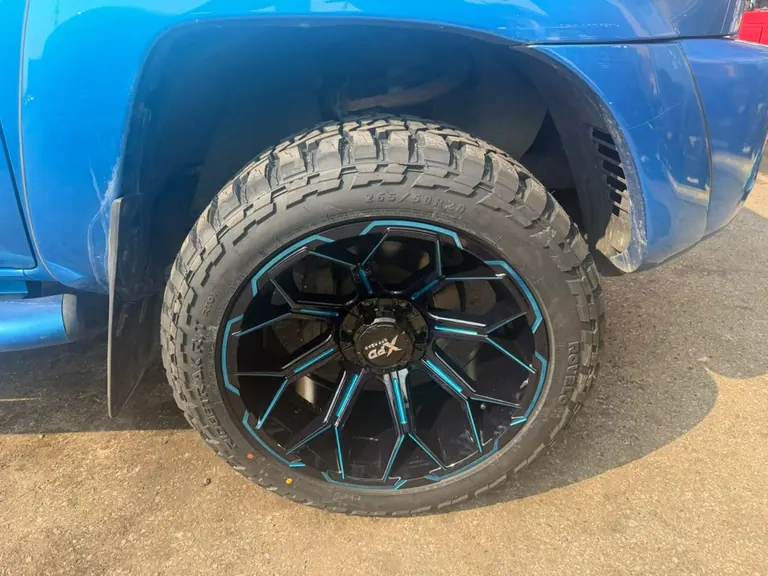
The sidewall in this shop photo shows 265/50R20. In that marking, 265 is the nominal width in millimeters, 50 is the sidewall aspect ratio and 20 is the wheel diameter in inches. The nominal sidewall calculation is 265 multiplied by 0.50, or 132.5 millimeters.
This is an example of reading a marking, not an approved replacement size for your vehicle. The photo does not verify the wheel width or offset, clearance, load requirements or the vehicle's original placard. Photograph your own complete sidewall and door placard when preparing a quote request.
Frequently asked questions
Can I use the size from only one tire?
Check the door placard and compare at least one front and one rear tire because some vehicles use different sizes by axle.
Is 215/55R17 the same as 215/55/17?
People often write them informally in similar ways, but the complete standardized sidewall marking includes the construction letter and additional service information.
Can I install a different tire size?
Sometimes an alternative size is appropriate, but it must be evaluated as a complete fitment for wheel compatibility, overall diameter, clearance, load capacity, and vehicle requirements.
Why should I call before visiting?
Inventory, condition, brand, and price can change. Calling with the full size and vehicle information helps the shop confirm a useful next step.
Related guides
Continue reading

Tire Care · 3 min read
Tracking Tire Wear on an EV Without Guessing the Cause
If an EV's tires wear faster than expected, begin with measurements and the actual maintenance history.
Read the guide →
Tire Care · 3 min read
After Buying Tires, Keep Registration and Purchase Records
The paperwork after a tire purchase is useful long after the installation visit.
Read the guide →Tire Care · 3 min read
Checking a Tire Recall Starts With Accurate Identification
A recall can apply to a particular product and production range rather than every tire carrying the same brand.
Read the guide →